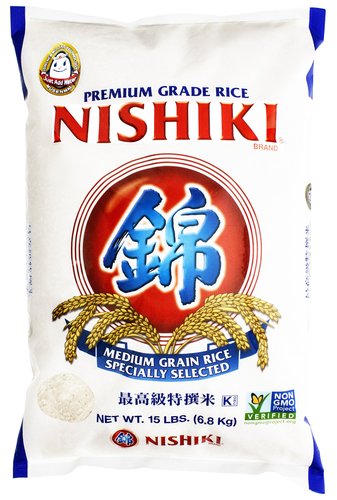
I've only ever bought Nishiki rice, since that was the one my parents told me to get when I started college. It tastes great. It's got this soft, sticky texture I really like as opposed to the drier rice you'd get from a Chinese takeout box. I never really thought about rice varieties because rice was just rice to me. I'm Asian and eat it with most of my meals. One bag for everything: fried rice, curry, and the occasional sushi attempt at home.
Japanese Rice? Japanese-style Rice?
The bag does say "product of USA" if you bother to look. I technically knew this, I just never cared enough to think about it. But in my mind it was "Japanese rice". It's the style after all.
But how is the rice Japanese, but grown in the US? It reminded me of Champagne. You can't legally call your product champagne unless it comes from that region of France, except Californian champagne, which was a loophole some people found. Maybe this was one of those.
I found out that there's a difference between rice in Japan, and "Japanese-style" rice. Most "Japanese-style rice" sold in America is grown in California to no surprise, with a small amount coming from Texas.
Unlike champagne, there's no legal protection for "Japanese-style" rice. It's just pointing at the style of the rice itself. Short-grain, sticky (think holding sushi together). But surely there's a real name for this.
Rice Families
It's called japonica, and it's one of two families that almost all rice splits into. The other half is called indica. I'm pretty sure these are just the Latin terms for "Japanese" and "Indian", noting their origins.
Indica is more long-grain. Think basmati rice, which is very long in length. There's a starch called amylose that prevents sticking and helps soak up flavor instead. Another example is Jasmine rice, often used in Southeast Asian cuisines. Fried rice, Thai curry + rice are some examples.
On the other hand, Japonica is shorter, rounder, and much stickier. These variants have a starch called amylopectin, which does the opposite of amylose. Within japonica there's still a range from medium-grain to short-grain. The shorter the grain, the stickier it cooks. Japanese short-grain is the classic sticky version that is used in Japanese cuisine to mold shapes for sushi and onigiri. Arborio is another japonica, a medium-grain from Italy, but instead of holding its starch in, it releases it while cooking. If you've ever had risotto, it's because these starches dissolve into the broth, making it creamier.
The Japonica Map
Japonica rice variety is defined by two key factors: the stickiness of the cooked rice and the firmness of the individual grains. While researching, I came across all this on a site called the rice factory, which imports rice from actual Japanese farms to the US. The map below is based on some of their best sellers.
Koshihikari is the main one, often noted as the benchmark variant that all others are compared to because it has the most popular balance of flavor and texture. Because it's the top variety, people pay close attention to exactly where it's grown. Within Niigata prefecture there's a sub-region called Minamiuonuma that's considered the best growing area in the country. A bag of this costs almost double what regular Niigata Koshihikari does.
Hokkaido is already famous for high-quality food like dairy and seafood, so I thought it would make sense if their rice was top-tier as well. They have Yumepirika and Nanatsuboshi. Yumepirika is a close competitor to Koshihikari, sitting right next to it on the maps in terms of quality. Nanatsuboshi is firmer and less sticky. It's used as a go-to choice for bento boxes because it holds its texture really well as it cools down.
Japan takes all of this seriously enough that there are certified rice sommeliers. There's an annual competition where different prefectures submit their best harvest to get ranked, and some regions build whole tourism campaigns around being that year's top ranked area.
Trying It for Myself
At the end of the day, all of this is just research for fun. I haven't sat down to actually taste the differences between all these different rice variants. And I'm not about to shell out money for artisanal rice variants for my home cooking, Nishiki will still be my go-to. But who knew something as basic as rice could have so much depth? I'm going to Japan soon and plan to track some of these down just to see if I can actually tell the difference. So stay tuned.